
How Bench Warrants Work in Garfield County
A bench warrant is a judge's order to bring someone back into court. Garfield County judges issue them most often after a failure to appear, unpaid fines, a missed condition, a bond violation, probation trouble, or contempt. Colorado Rule 4 also covers two more triggers. One is a person served with a summons who skips the hearing. The other is a penalty assessment left unpaid or unanswered. Some states call this a capias. Colorado and Garfield County paperwork rarely uses that word, so match the wording on your own case papers instead. A Garfield County bench warrant does not close anything. It keeps the criminal, traffic, family, or municipal case open and allows arrest until the issuing judge acts on it.
Garfield County Has No Single Bench Warrant List
Garfield County posts no public bench-warrant name list. The Colorado Judicial Branch docket search can surface hearings like "Appearance on Arrest Warrant," but it is a hearing tool, not a warrant database. A blank search does not prove the warrant is gone. Municipal warrants often sit inside a city's own case file. The Garfield County Sheriff's Office says each municipality keeps its own records. Begin with the court named on your summons, ticket, bond paper, or notice. Don't know which court it is? Call the Combined Courts Clerk, then the likely municipal clerk. GCSO and the jail can explain custody and bond questions. Only the issuing judge can recall the warrant.
Key point: A docket, inmate search, and sheriff record each show a different slice; none is a countywide clearance certificate.
Bench Warrant Issuance in Garfield County
Every Garfield County bench warrant starts with an obligation already on the books. A missed setting, an unpaid payable assessment, or an unfinished condition lands in front of a judicial officer. That judge decides whether to issue the warrant and may set a bond or require an appearance. The clerk records the order, and GCSO or the proper city police agency receives it for service. The official Garfield County court interface lays out the Glenwood Springs and Rifle courthouse routes.
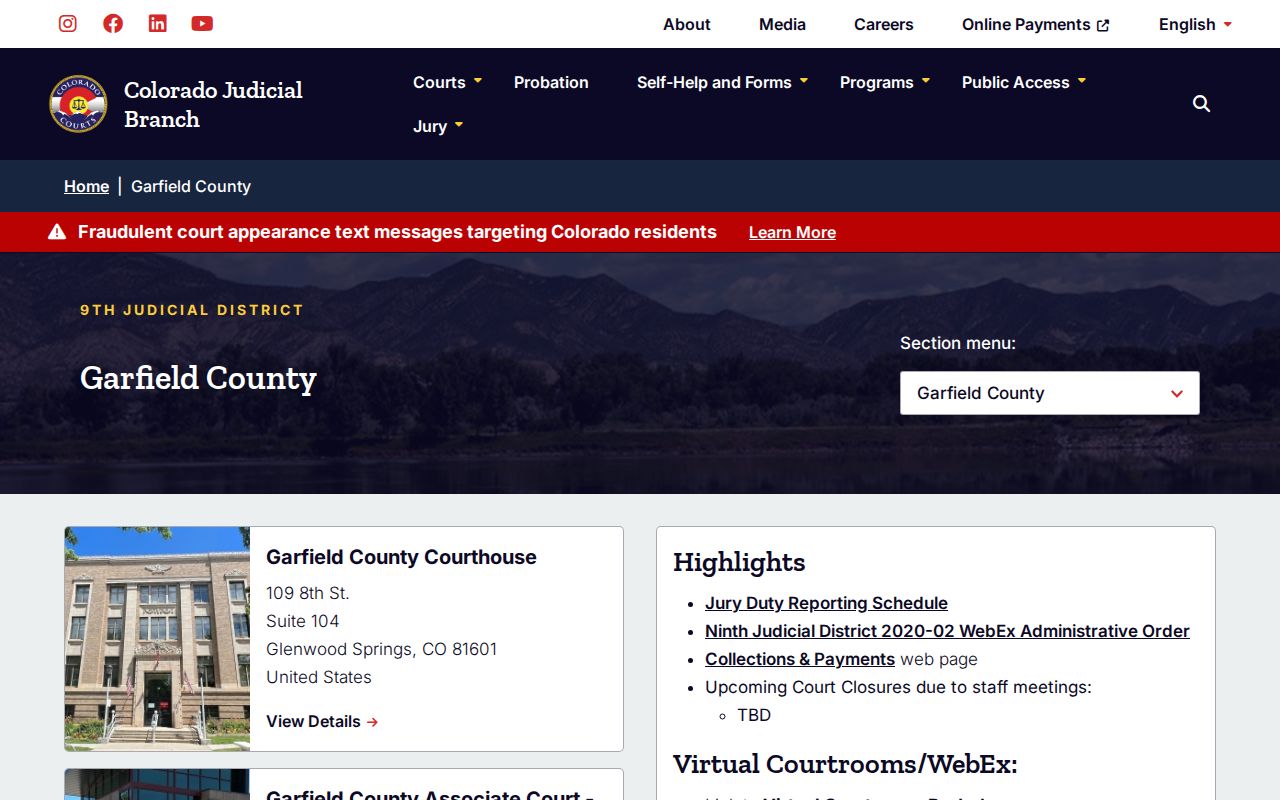
Those two courthouses split state-court access in Garfield County, so pick the right clerk before making any bench-warrant request.
The path can be short: required date → nonappearance → judge's order → clerk entry → service or later recall. Yet the exact timing is not published as one Garfield County rule. A person should not assume there is a grace period or mailed warning. New Castle is especially direct: its official court page says attendance on an adult summons is mandatory, and failure to appear results in an arrest warrant and could be a separate offense.
Once issued, a Garfield County bench warrant stays under court control. Paying a balance, leaving a message, or finding nothing online does not by itself prove the order was withdrawn.
New Castle and Silt Bench Warrant Rules
Garfield County's town courts make local routing matter. New Castle Municipal Court sits at 450 W. Main Street, and its clerk answers at 970-984-2311. Adults summoned there must attend. The court separates a payable penalty assessment, which carries a 20-day choice, from a mandatory appearance, so ask which one you face before sending money. Silt Municipal Court is at 231 N. 7th Street, reachable at 970-876-7976. Silt openly lists misdemeanors, bench warrants, and summons or penalty assessments among its cases. Payments go in person, by phone card, by mail, or into a 24-hour night depository. Those are payment channels only. Silt does not state that payment alone recalls a warrant, so confirm with the court. The Ninth Judicial District collections page shows the official citation-search and payment routes.
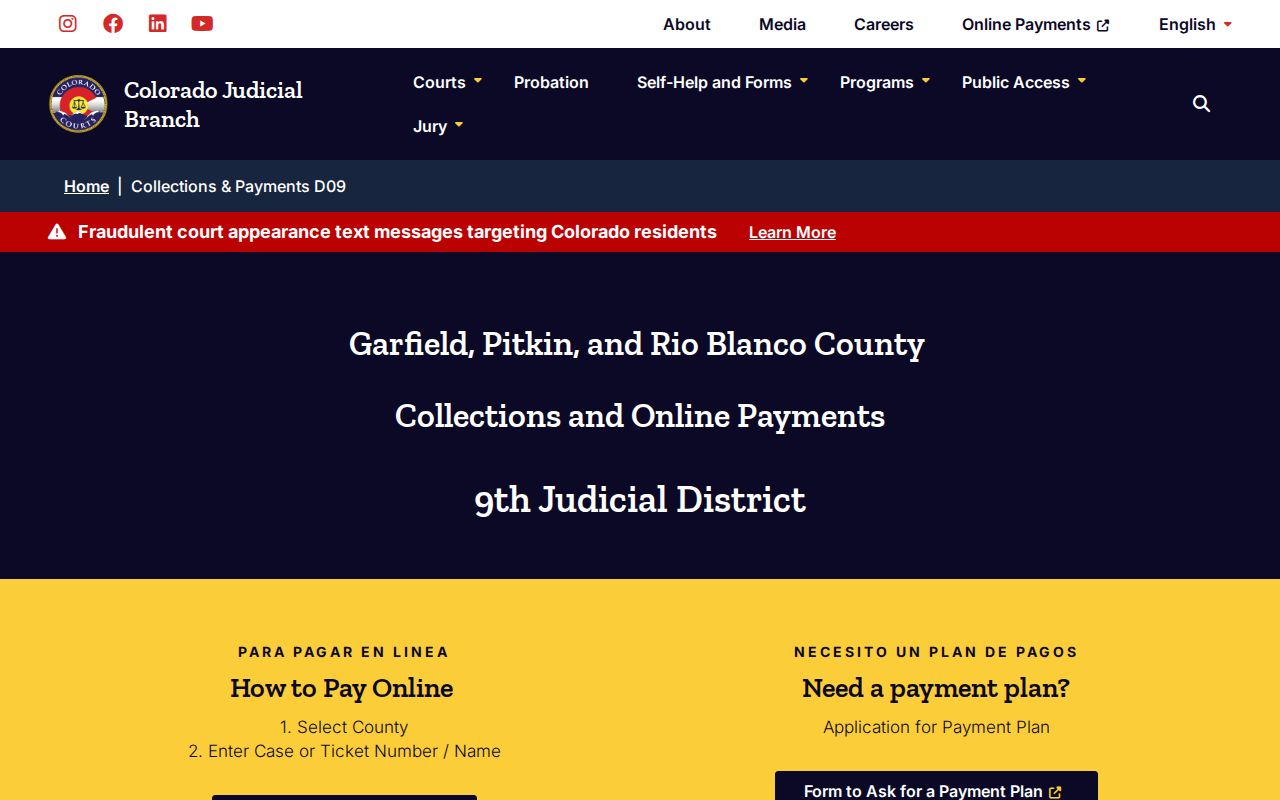
That district payment system helps with a balance, but a Garfield County warrant recall still turns on the issuing judge or clerk. In either town, ask directly about active status, any required judge appearance, the reset process, bond, and proof of recall. Tie every answer to your exact case number.
How Bench and Arrest Warrants Differ
Both orders can end in an arrest. They just start at different points. A bench warrant enforces an obligation in a case already before a Garfield County court. An arrest warrant begins with sworn facts showing probable cause that a named person committed an offense. The detailed Garfield County arrest warrant lookup walks through that separate probable-cause route.
| Feature | Bench Warrant | Arrest Warrant |
|---|---|---|
| Trigger | Missed date, payment, compliance, contempt, or bond duty | Probable cause for an alleged offense |
| Starting record | An existing court case or summons | A sworn complaint or affidavit |
| Issuing authority | Judge in the pending case | Judge or magistrate after review |
| Resolution focus | Reset, appearance, recall, payment if allowed, or bond | Surrender, booking, bond, appearance, or court-ordered recall |
Reading Garfield County Bench Warrant Status
A Garfield County bench-warrant file can show the Colorado case number, court and division, reason for the order, issue date, bond condition, current status, and next setting. State docket screens split a four-digit year from the case class and sequence. A typical format looks like 2026CR####. That is only a format example. GCSO has published no separate warrant-number pattern.
- Active or outstanding
- The record has not been reported served, recalled, quashed, or cleared.
- Recalled
- The issuing court withdrew the warrant.
- Quashed
- The court cancelled or invalidated the order.
- Returned
- The serving agency reported action back to the court.
- FTA
- Failure to appear at a required setting.
Garfield County does not publish its status abbreviations or update cycle. Ask the clerk for plain-language confirmation, and check when any sheriff-held record will reflect the judge's newest order.
Clearing a Bench Warrant in Garfield County
Resolution belongs to the issuing court, not to any other office. A Garfield County clerk can explain forms, dates, and payment mechanics but cannot give legal advice. A Colorado defense attorney may contact the court, seek a recall or quash order, request a new setting, or arrange a surrender. Garfield County publishes no recall packet or standard recall fee.
- Confirm the court, case number, warrant type, current status, and any bond.
- Ask the clerk whether payment, a reset, a motion, a scheduled appearance, or surrender is required.
- Consult counsel before appearing when arrest or custody is possible.
- If directed to surrender, verify the location, identification rules, booking steps, and permitted bond type.
- Attend the new setting and keep the receipt, bond papers, and signed recall order.
- Confirm the changed status with both the court and GCSO when both hold records.
Caution: Do not ignore an active bench warrant; service can occur during a traffic stop, and the underlying case remains unresolved.
Garfield County Bond Is Case-Specific
Garfield Administrative Order 2015-03 sorts warrants into two camps. New charges sit in one. Failure-to-appear, failure-to-comply, probation-violation, and parole-violation warrants sit in the other. A person held in Garfield County on one of those can be released by posting the bond the warrant requires, and the order's Pretrial Services Report process does not apply to those categories. The judge still fixes the amount, type, and conditions. The Colorado Judicial Branch bond resource walks through cash, personal recognizance, surety, property, and judicial-review routes. JDF 370 is the appearance-bond form used to cancel a warrant or free someone from custody, though it guarantees no particular outcome. The Garfield County Jail bond door at 107 8th Street in Glenwood Springs runs around the clock. Call 970-945-1377 ext. 1033 before counting on that route. Bond gets a person out. It does not dismiss the charge, erase the missed setting, or replace the next court date.
Garfield County Courts That Issue Bench Warrants
One Garfield County courthouse handles most bench warrants. The Combined District and County Courts at 109 Eighth Street, Suite 104, in Glenwood Springs take felony, family, probation, misdemeanor, petty-offense, and state traffic matters within their jurisdiction, and the clerk answers at 970-928-3065. Rifle Associate County Court, at 200 E. 18th Street, Suites 103 and 104, handles county-court matters at 970-625-5100. City judges run their own show after that. Municipal warrants for city-code and municipal-traffic cases belong to each town's judge. Glenwood Springs Municipal Court sits at 101 W. 8th Street, 970-384-6530, and Rifle Municipal Court at 201 E. 18th Street, 970-665-6420. New Castle and Silt use the contacts listed above. Carbondale Police can be reached at 970-963-2662, though Carbondale lists no direct municipal-court line.
Garfield Combined Courts
District and County Court records and warrant status
970-928-3065
Garfield County Sheriff and Jail
Custody, service, and confirmed bond logistics
970-625-8095
Courts in Garfield County issue and recall warrants. The sheriff or police serves and holds, so contact both when a status change must move between systems.
Garfield Bench Warrant Records and Access
The official Garfield County court page covers courthouse, docket, payment, and records routes, and a court-record search request works when online docket data falls short. The court search fee is $5, with a stated response window of three to five business days. Ask for the current terms before ordering. GCSO's Records Division takes formal requests and notes that municipal records stay with each city. Colorado access rules permit restrictions tied to law, court order, public interest, sealed matters, and juvenile protections. Supply an ID and signed certification if the form asks for them. A withheld or missing public result proves nothing about clearance; only the issuing court can confirm a warrant's status.
Note: GCSO warns it will not call and demand money to prevent arrest; verify any payment instruction through an official court or jail number.