
How Arrest Warrants Work in Garfield County
A prosecutor or peace officer gathers facts on a suspected crime and files a sworn complaint or affidavit. Under C.R.S. §16-3-108, those facts must establish probable cause that an offense occurred and that the named person committed it. A judge or magistrate reviews that showing. Only then does the arrest warrant issue. It directs a peace officer to arrest the person and bring them before a judge without needless delay. Garfield County District Court handles felony matters. County Court covers misdemeanors, petty offenses, and state traffic cases, while municipal judges issue warrants in city-code cases. The court keeps control of every order it issues. GCSO or another directed agency executes it, and that division of power runs through all Garfield County warrant records.
Garfield County Probable Cause Review
In Garfield County, probable cause is more than a hunch. It means facts strong enough to support a reasonable belief that an offense occurred and that one particular person took part. The affidavit is sworn before a judge or notary, and a judicial officer then reviews it. If the showing holds up, the signed arrest warrant states its command and joins the court file. Some papers behind it stay closed at first. A sealed indictment, an unexecuted warrant, a juvenile matter, or a record under court order can remain restricted until arrest, return, or unsealing. Colorado criminal-justice access law adds another layer. A records keeper may deny inspection when disclosure is barred or contrary to the public interest. So a missing affidavit proves nothing. Its absence does not cancel an order in Garfield County, and the issuing court can explain what stays restricted and why.
Key point: A public docket result is a search lead, not a judicial finding that no Garfield County arrest warrant exists.
Arrest Warrants: What They Contain
The paper record holds more than a screen shows. Ask the clerk which fields exist and whether sealing or redaction applies. Colorado case numbers use a year, class, and sequence format, such as 2026CR####. That string is a format example. It is not a real person's record, and GCSO has published no separate local warrant-number format for Garfield County.
| Warrant and case number | Identifiers connecting the command to the court file |
|---|---|
| Named subject | Name and possible birth date or descriptors, subject to access limits |
| Charge or offense | C.R.S. citation, plain description, and felony or misdemeanor class |
| Issuing judge and court | The judicial officer and venue controlling status and bond |
| Bond | Amount, cash, surety, PR, property, special condition, or hold |
| Status and dates | Issue, service, return, recall, quash, or clearance events |
Garfield Arrest Warrant Search Limits
GCSO posts no public active-warrant name search. No complete downloadable list exists either. The official Garfield-filtered docket search finds hearings by court, date, case number, party, or attorney. "Appearance on Arrest Warrant" can appear as a hearing type. The tool still is not a warrant database. It also requires at least one filter beyond date. Current Inmates shows custody, not open warrants, and GCSO activity reports describe past events rather than current status in Garfield County. A city matter may stay with its municipal court. A workable Garfield County warrant check runs from the issuing clerk to GCSO or the jail, on to a formal sheriff records request, a court-record request, the docket search, and counsel. Very recent, sealed, juvenile-restricted, or not-yet-docketed matters may not appear.
How Warrants Get Served in Garfield County
GCSO runs law enforcement and the jail. It also serves assigned process across Garfield County. Municipal police handle city process, Colorado State Patrol works the state highways, and CBI may join investigations. Serious fugitive work can draw the U.S. Marshals Service, the Colorado Violent Offender Task Force, or Garfield County's SPEAR team. None of them replaces the issuing judge. Service can happen during a planned operation, a traffic stop, contact at a known location, or a voluntary surrender. After arrest comes booking. The person is identified, receives the required advisement or first appearance, and goes free only under the bond or conditions a judicial officer authorizes.
SPEAR Serves Serious Garfield Warrants
Special Problems Enforcement and Response, or SPEAR, is a full-time multi-agency major-crimes task force serving Garfield County, created in 2022. Its investigators have joined COVOTF fugitive operations since 2017. They work with local agencies, DEA, USMS, and HSI. The public information line is 970-945-0744. The official SPEAR page describes task-force coordination, not a public wanted-person database. GCSO press releases can describe completed enforcement. They do not prove an arrest warrant remains active today. Never approach someone you think is wanted. Pass urgent location details to law enforcement, use the issuing court for a self-check, and see the Glenwood Springs Police page for the municipal role in Garfield County warrant service.
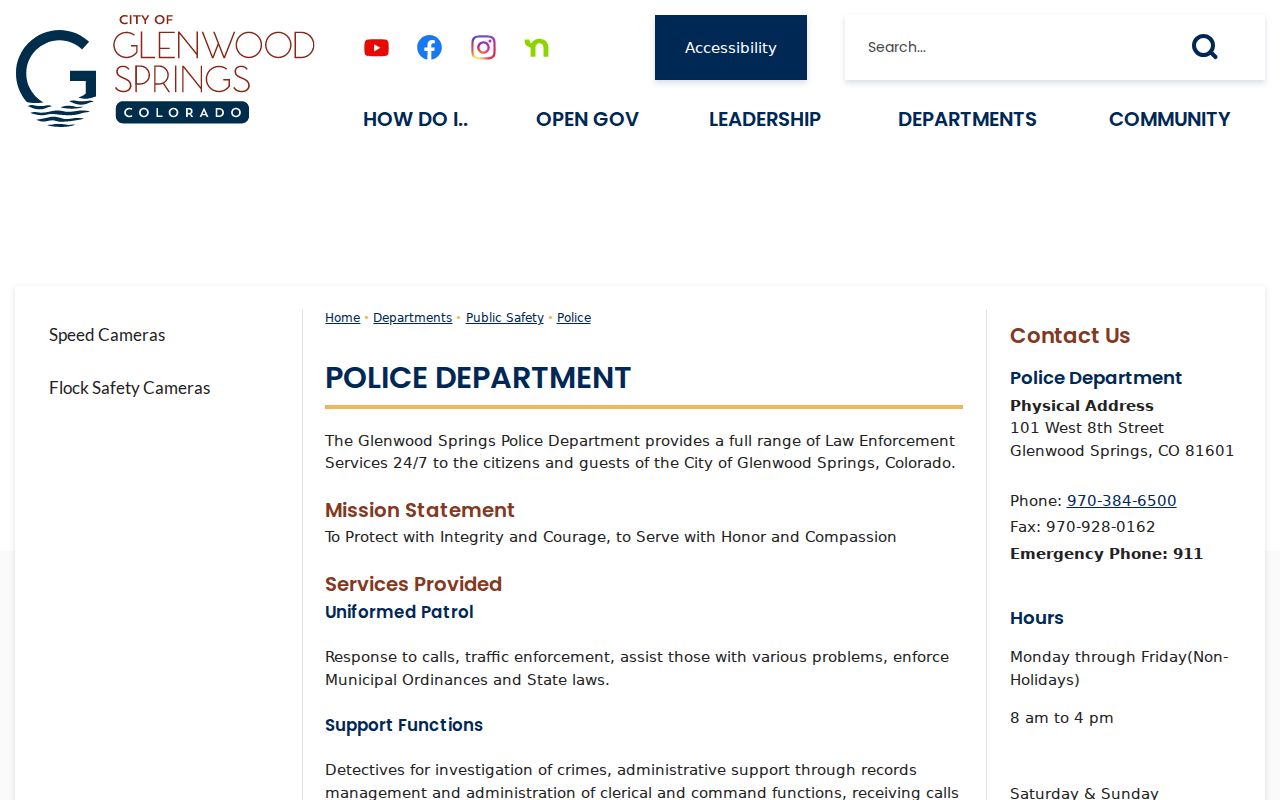
The city contact block separates municipal police service from the court's power over a Garfield County warrant. Police make the arrest; only the court issues or recalls.
Arrest Warrants, Summonses, and Bench Warrants
These papers call for different responses. A summons directs a person to appear without immediate custody. An arrest warrant orders custody after probable-cause review, while a bench warrant usually follows a missed duty in an existing case. Garfield County's bench warrant lookup details the failure-to-appear route.
| Feature | Arrest Warrant | Summons | Bench Warrant |
|---|---|---|---|
| What it orders | Arrest | Appear as directed | Arrest for a missed obligation |
| Basis | Probable cause | Charge handled without initial custody | Failure to appear or comply |
| Issuer | Judge or magistrate | Court or authorized officer | Judge in the pending case |
| Response | Counsel, surrender, bond, appearance | Attend on time | Reset, recall, appearance, bond |
Garfield County Arrest Booking and Bond
Garfield Administrative Order 2015-03 covers new charges. Its pretrial-services process governs release there. People held on FTA, failure-to-comply, probation-violation, or parole-violation warrants follow a different rule and may post the bond required on the warrant. A judge keeps the final say. The state bond page explains the cash, personal-recognizance, professional surety, property, and hold-until-judge options used in Garfield County courts.
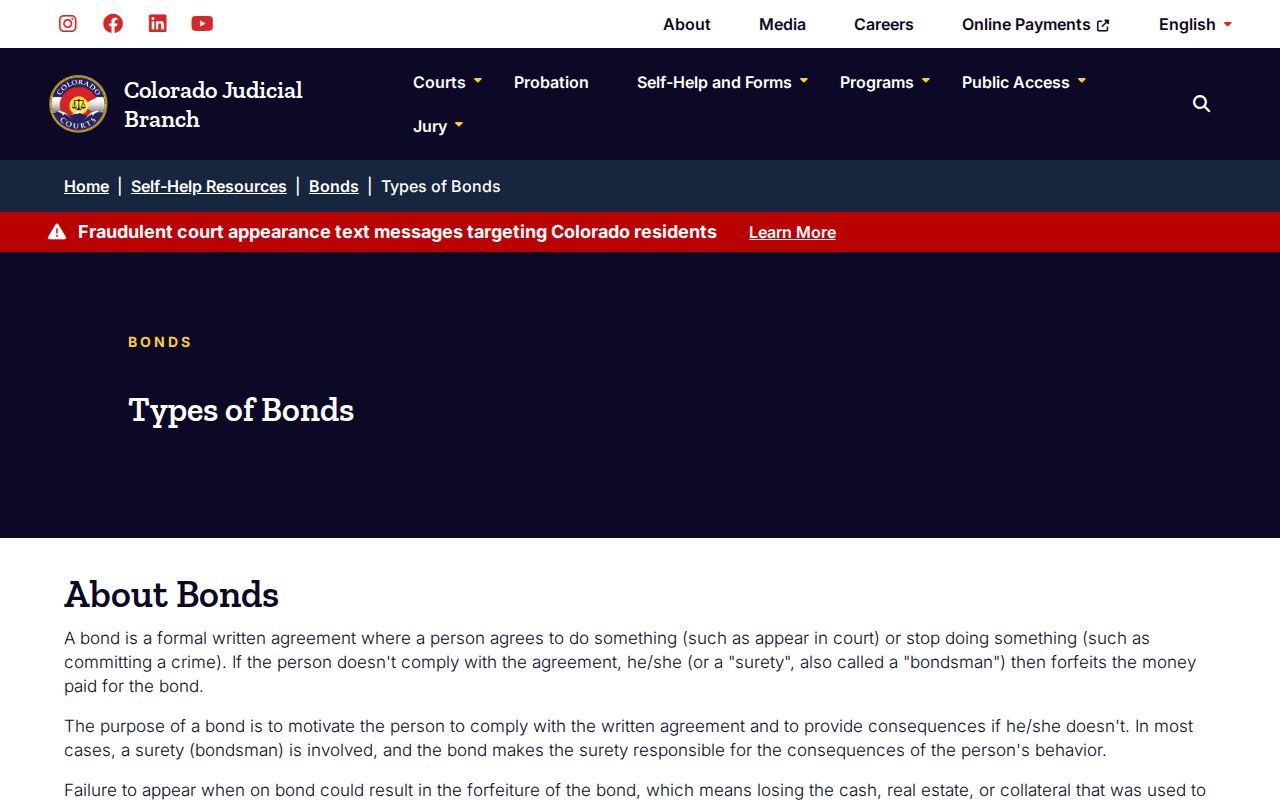
The forms help you spot the bond paperwork for Garfield County. Still, the warrant itself and the court's current order control any release. The jail bond door at 107 8th Street runs around the clock, so confirm details at 970-945-1377 ext. 1033.
Handling an Arrest Warrant in Your Name
Before you act, confirm the issuing court, case number, charge, status, and bond through official channels. Get a Colorado defense attorney. If you qualify, take the public-defender route. Counsel can ask for a summons instead of arrest, move the Garfield County court to recall or quash the warrant, arrange a scheduled appearance, or coordinate a walk-through. The judge controls the order, so nothing is guaranteed.
- Call the issuing clerk and verify the active warrant and court file.
- Ask counsel about recall, surrender, and first-appearance options.
- Confirm with the jail where and when to surrender, plus permitted property and identification.
- Prepare the exact bond type the court allows.
- Keep booking, bond, and next-date papers, then attend every setting.
Important: Talk with a lawyer before surrender; an active Garfield County arrest warrant may be served during any law-enforcement contact.
Garfield County Arrest Warrant Courts
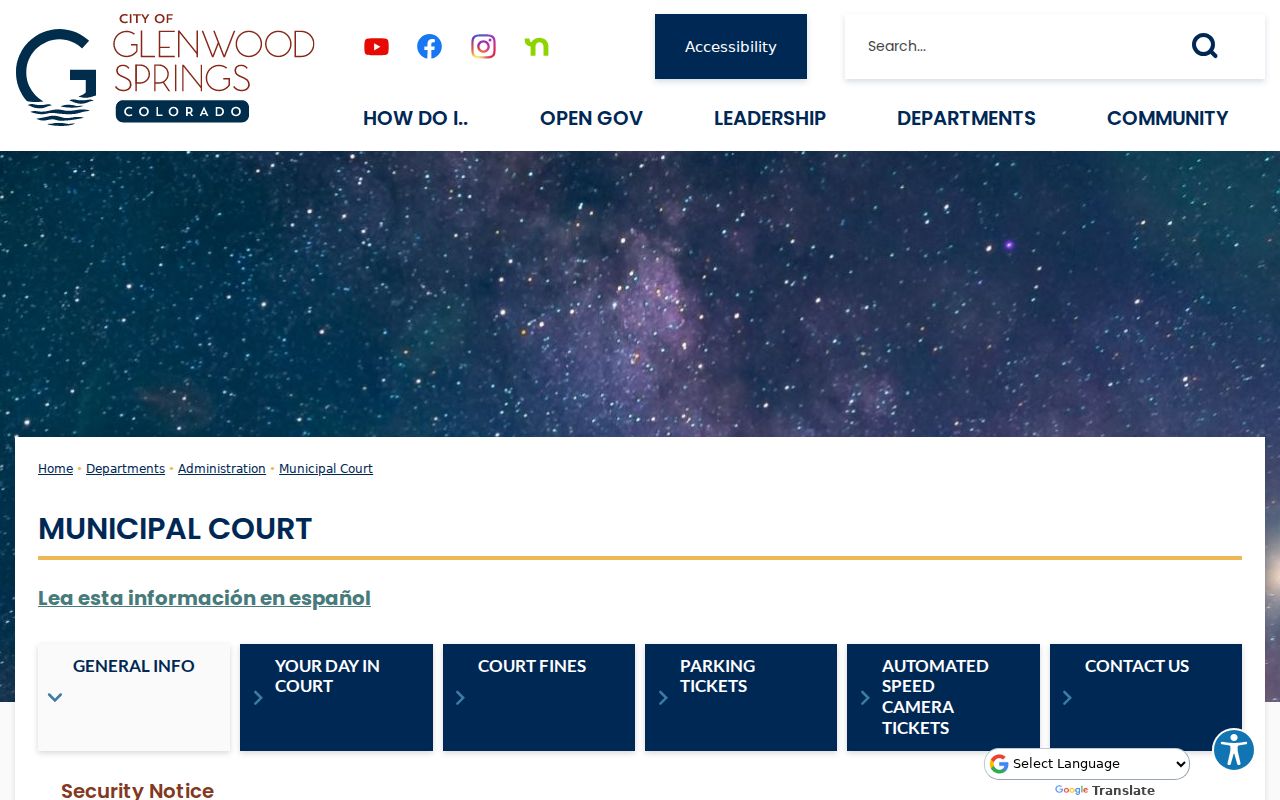
Garfield County's Combined District and County Courts sit at 109 Eighth Street, Suite 104, Glenwood Springs, reachable at 970-928-3065. Rifle's Associate County Court is at 200 E. 18th Street, Suites 103 and 104, phone 970-625-5100. The municipal layer is separate. The official court page shows both county access points. Glenwood Springs Municipal Court, at 101 W. 8th Street, answers at 970-384-6530.
A city-code warrant belongs with Rifle, not the Garfield County clerk. Rifle Municipal Court sits at 201 E. 18th Street, 970-665-6420. The Rifle court source lists its scope and clerk contact.
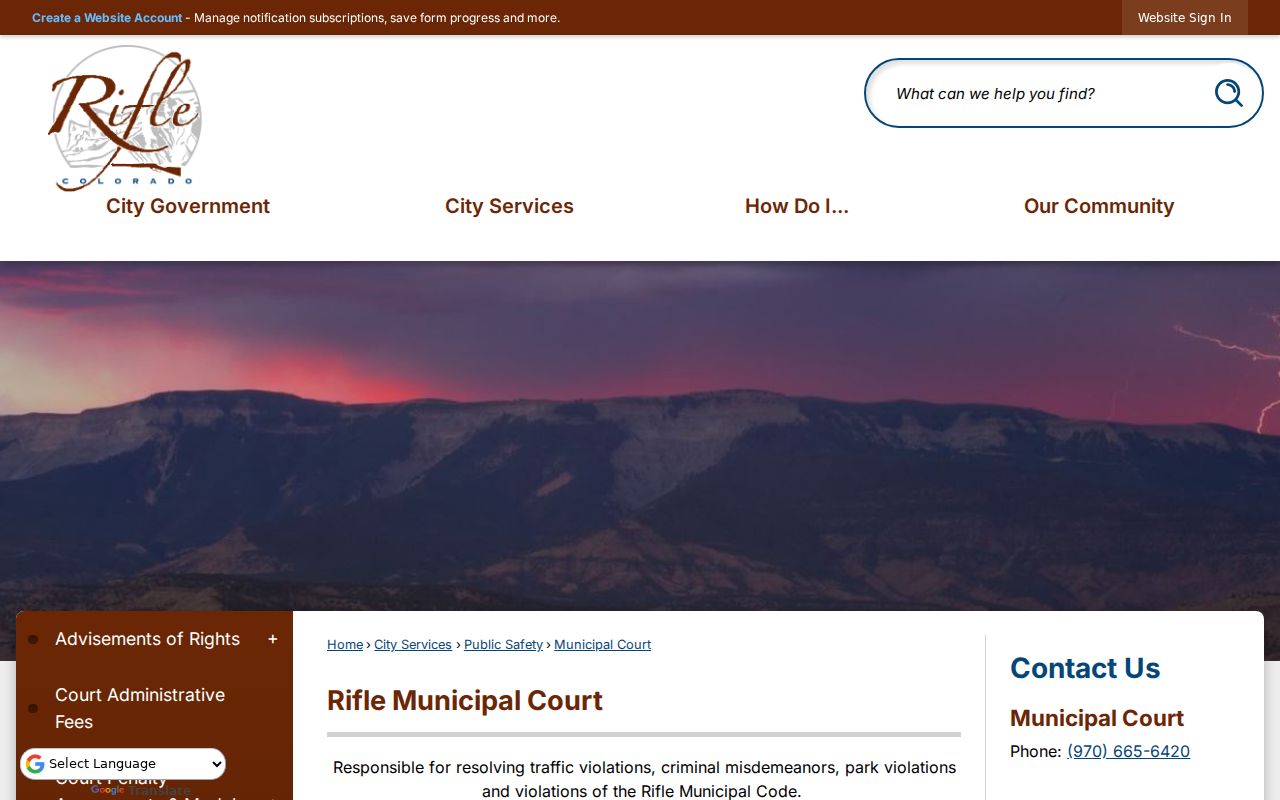
Rifle, New Castle, and Silt each keep their own municipal files, so a Garfield County city-code case never belongs to the county clerk. The issuing clerk alone controls warrant status.